

Volkswagen ID.3 MPG equivalent and efficiency
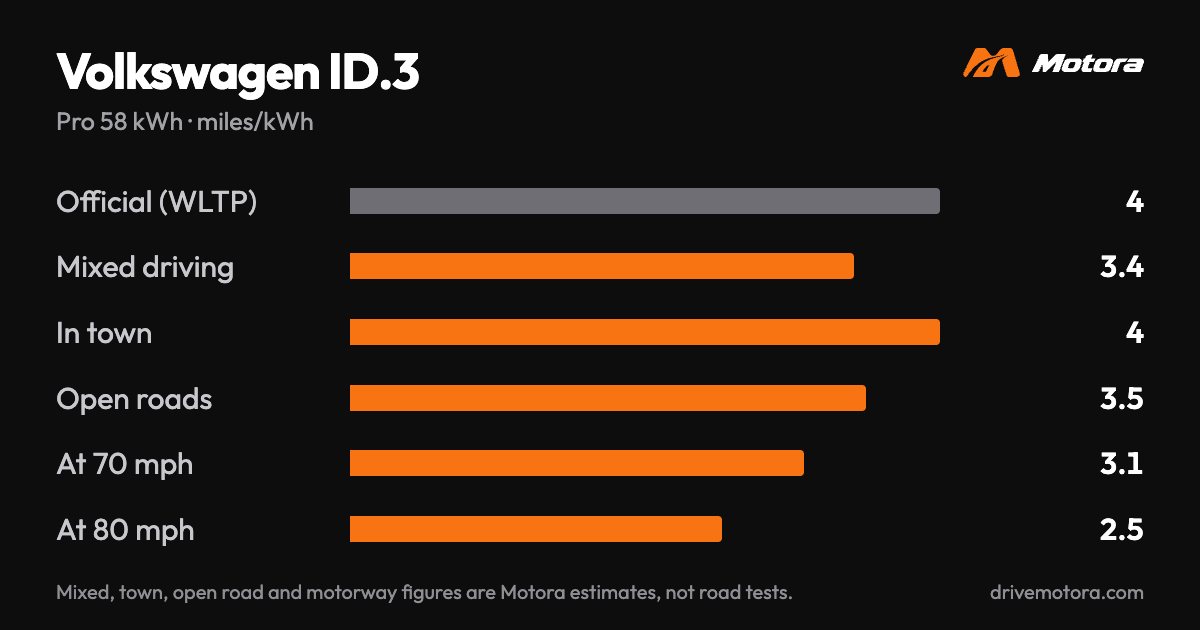
Electric cars don’t burn fuel, so the Volkswagen ID.3 has no true mpg. Its official 4 miles per kWh works out at about 135 MPGe, and the most efficient version is the Pure 45 kWh. Expect about 4 miles/kWh in town and 3.1 miles/kWh at a steady 70 mph from the Pro 58 kWh version.
2020 on
At a glance
Every version
Official efficiency for each version, converted to MPGe, with our real-world estimates.
| Version | Years | Power | Miles/kWh | kWh/100 km | MPGe | Town | 70 mph |
|---|---|---|---|---|---|---|---|
| Pure 45 kWh | 2020 on | 143 hp | 4.0 | 15.5 | 135 | 4.0 | 3.1 |
| Pro 58 kWh | 2020 on | 201 hp | 4.0 | 15.5 | 135 | 4.0 | 3.1 |
| Pro S 77 kWh | 2021 on | 201 hp | 4.0 | 15.5 | 135 | 4.0 | 3.1 |
| GTX 79 kWh | 2024 on | 282 hp | 4.0 | 15.5 | 135 | 4.0 | 3.2 |
These versions were tested on WLTP, which is closer to real driving than the older NEDC test, though most cars still land a little below it, and well below it at motorway speeds. MPGe is converted from the official figure at 33.7 kWh per gallon, so it won’t match a US EPA rating exactly.
What it costs to run
Electricity only, for the Pro 58 kWh version in mixed real-world driving, at 27p a kWh at home.
| 5,000 miles a year | £395 |
| 8,000 miles a year | £632 |
| 12,000 miles a year | £948 |
| Per mile | £0.08 |
| 100 motorway miles at 70 mph | £8.77 |
| The same 100 miles at 80 mph | £10.70 |
Which version is cheapest to run
At 8,000 miles a year, the GTX 79 kWh costs about £3 a year less in electricity than the Pro 58 kWh.
| GTX 79 kWh | £629 |
| Pro S 77 kWh | £632 |
| Pure 45 kWh | £632 |
| Pro 58 kWh | £632 |
Against cars with similar power
In mixed real-world driving, the Pro 58 kWh version ranks 3 of the 11 electric cars we cover with 161 to 251 hp, at 3.4 miles/kWh against an average of 3.2 miles/kWh. That puts it better than average.
Closest cars with similar power that use less: Mercedes-Benz EQA 250+ (2023 on) (3.6 miles/kWh), BMW i3 (4.1 miles/kWh).
Compares each model’s everyday engine using our estimates, so close positions are very similar.
Where the energy goes
On a typical mixed drive in the Pro 58 kWh version. Speeding up is the biggest share, so smooth driving saves more here than anything else you control.
Town, open road or motorway
Like most electric cars, the Pro 58 kWh version is at its best in slow traffic, because it takes energy back when braking. Motorway speeds are its weakest case: 3.1 miles/kWh at 70 mph against 4 miles/kWh in town.
What changes your efficiency
Three habits, worked out for the Pro 58 kWh version.
What others have found
Published findings about this car’s fuel use. Reported issues don’t affect every car.
ADAC: ID.3 Pro S used 20.0 kWh/100 km at start
In ADAC's long-term test the ID.3 Pro S (77 kWh net) measured 20.0 kWh/100 km including charging losses at the start, improving to 18.3 kWh/100 km at 172,000 km after software updates that manage battery temperature better. Keeping software up to date can therefore help efficiency. Applies to: Pro S 77 kWh.
Source: ADAC
The official figure says 4 miles/kWh. What does yours really get?
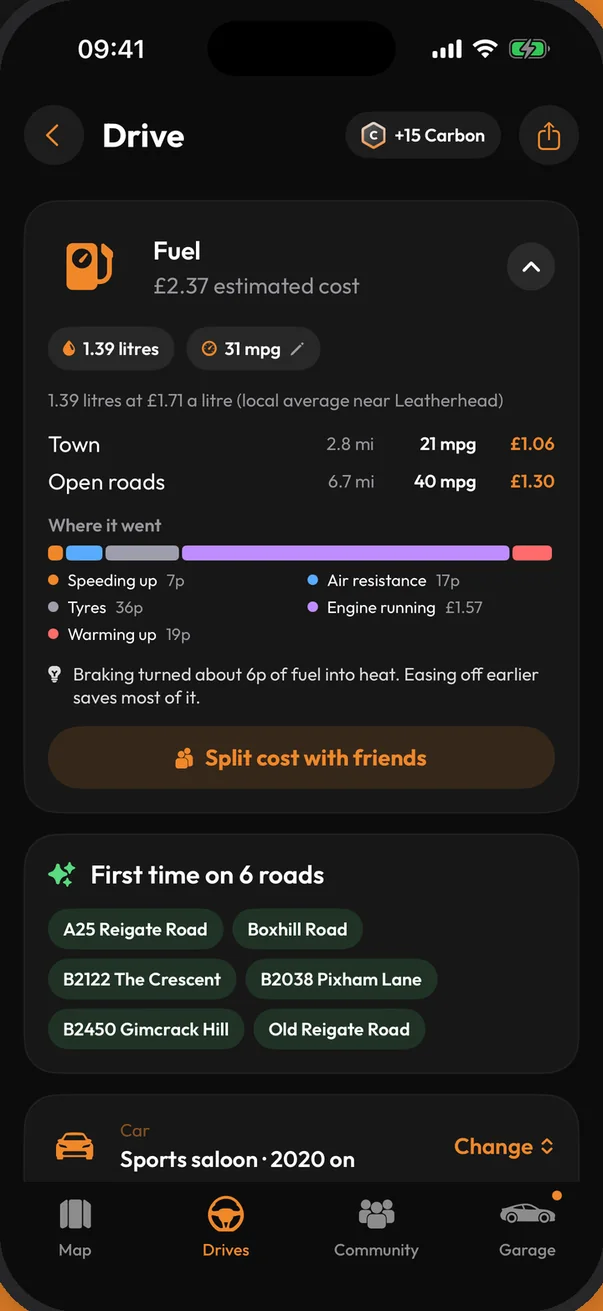
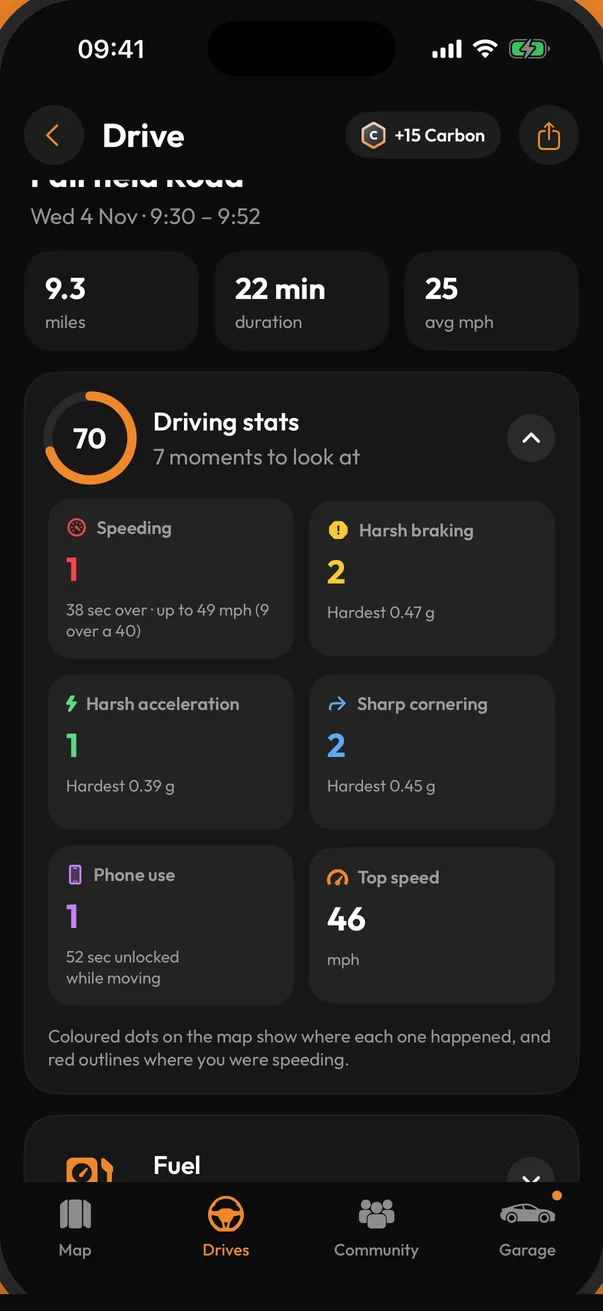
Motora records every drive on its own and scores how you drove, with harsh braking, hard acceleration, sharp corners and phone use pinned on the route.
With Motora Club it also works out what each drive cost for your exact engine, using pump prices near you, and shows your real economy against the official figure. Then build your car in a 3D garage.
Questions
What is the Volkswagen ID.3’s MPG?
Electric cars don’t burn fuel, so the Volkswagen ID.3 has no true mpg. Its official 4 miles per kWh works out at about 135 MPGe, and the most efficient version is the Pure 45 kWh. Expect about 4 miles/kWh in town and 3.1 miles/kWh at a steady 70 mph from the Pro 58 kWh version.
Which Volkswagen ID.3 is the most economical?
The Pure 45 kWh, officially 4 miles/kWh. The least efficient is the Pure 45 kWh at 4 miles/kWh.
Is the Volkswagen ID.3 better in town or on the motorway?
Like most electric cars, the Pro 58 kWh version is at its best in slow traffic, because it takes energy back when braking. Motorway speeds are its weakest case: 3.1 miles/kWh at 70 mph against 4 miles/kWh in town.
How much does 80 mph cost over 70 in the Volkswagen ID.3?
For the Pro 58 kWh version, about 22% more electricity over the same distance, on our model.
How much does the Volkswagen ID.3 cost to run in electricity?
About £632 a year for the Pro 58 kWh version at 8,000 miles, in mixed driving, at 27p a kWh at home.
Is the Volkswagen ID.3 good on electricity?
For its power, the Pro 58 kWh version is better than average: 3.4 miles/kWh in mixed driving on our estimates, against an average of 3.2 miles/kWh across the 11 electric cars we cover with 161 to 251 hp.
Lists and comparisons
More fuel economy pages
Official figures are combined test results and can differ a little between markets. Town, road and motorway figures are Motora’s estimates from a physics model calibrated to each official figure, not measurements of a particular car. Motora isn’t affiliated with or endorsed by Volkswagen. How we work this out. Figures last updated 24 November 2026.