

Kawasaki Ninja 650 (2020 on) MPG and fuel consumption
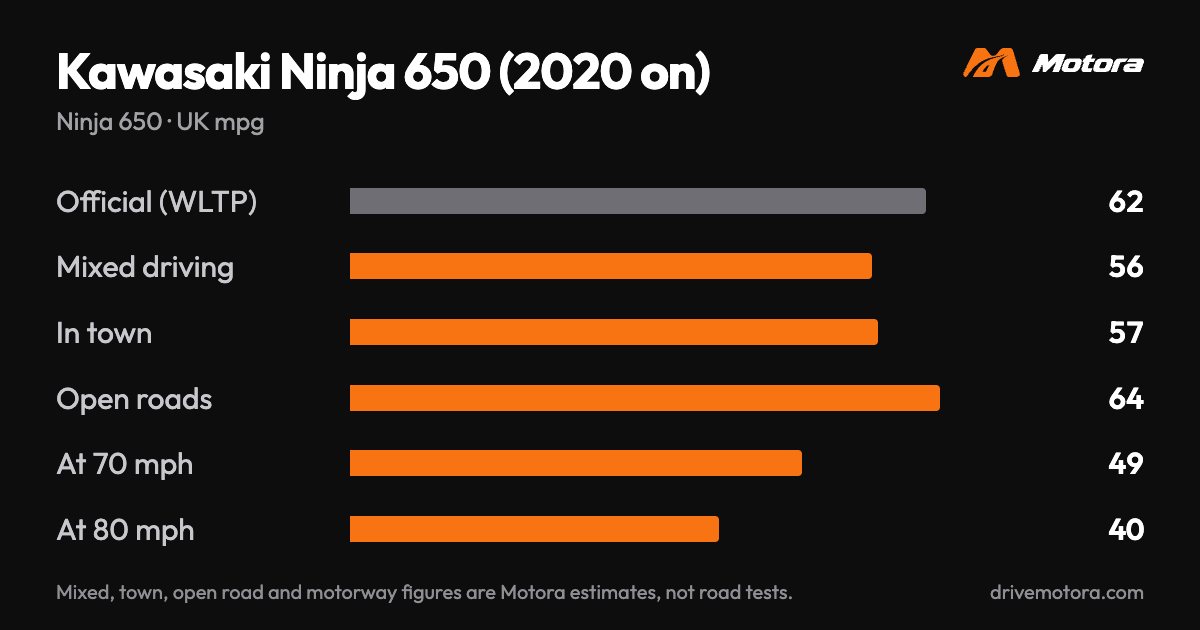
The Kawasaki Ninja 650 (2020 on) officially does 62 to 64 mpg depending on the engine (4.4 to 4.6 L/100 km). The most economical is the Ninja 650 (A2 35 kW) at 64 mpg. Expect about 57 mpg in town and 49 mpg at a steady 70 mph from the Ninja 650 engine.
2020 on
At a glance
Every engine
The official combined figure for each engine, with our real-world estimates for town and a steady 70 mph.
| Engine | Years | Power | UK mpg | US mpg | L/100 km | Town | 70 mph |
|---|---|---|---|---|---|---|---|
| Ninja 650 (A2 35 kW) | 2020–2023 | 47 hp | 64 | 53.3 | 4.4 | 58 | 50 |
| Ninja 650 | 2020–2023 | 67 hp | 62 | 51.6 | 4.6 | 57 | 49 |
| Ninja 650 KRT Edition | 2020–2023 | 67 hp | 62 | 51.6 | 4.6 | 57 | 49 |
| Ninja 650 | 2024 on | 67 hp | 62 | 51.6 | 4.6 | 57 | 49 |
These engines were tested on WLTP, which is closer to real driving than the older NEDC test, though most cars still land a little below it.
What it costs to run
Fuel only, for the Ninja 650 engine in mixed real-world driving, at average UK prices of 158.1p a litre.
| 5,000 miles a year | £639 |
| 8,000 miles a year | £1,023 |
| 12,000 miles a year | £1,535 |
| Per mile | £0.13 |
| 100 motorway miles at 70 mph | £14.77 |
| The same 100 miles at 80 mph | £18.09 |
Which engine is cheapest to run
At 8,000 miles a year, the Ninja 650 (A2 35 kW) costs about £31 a year less in fuel than the Ninja 650 KRT Edition.
| Ninja 650 (A2 35 kW) | £992 |
| Ninja 650 | £1,023 |
| Ninja 650 | £1,023 |
| Ninja 650 KRT Edition | £1,023 |
Against cars with similar power
In mixed real-world driving, the Ninja 650 engine ranks 4 of the 54 petrol, diesel and hybrid cars we cover with 54 to 84 hp, at 56 mpg against an average of 41 mpg. That puts it among the most efficient.
Closest cars with similar power that use less: Suzuki Swift Mk4 (56 mpg), Triumph Bonneville Bobber (2017 on) (59 mpg), Audi A2 (2000 to 2005) (59 mpg).
Compares each model’s everyday engine using our estimates, so close positions are very similar.
Where the fuel goes
On a typical mixed drive in the Ninja 650 engine. Air resistance is the biggest share, so speed and roof loads matter most.
Town, open road or motorway
The Ninja 650 engine does better around town than you might expect, about 57 mpg, because small engines work hard at speed. At 70 mph it falls to about 49 mpg.
What changes your mpg
Three habits, worked out for the Ninja 650 engine.
The official figure says 62 mpg. What does yours really get?
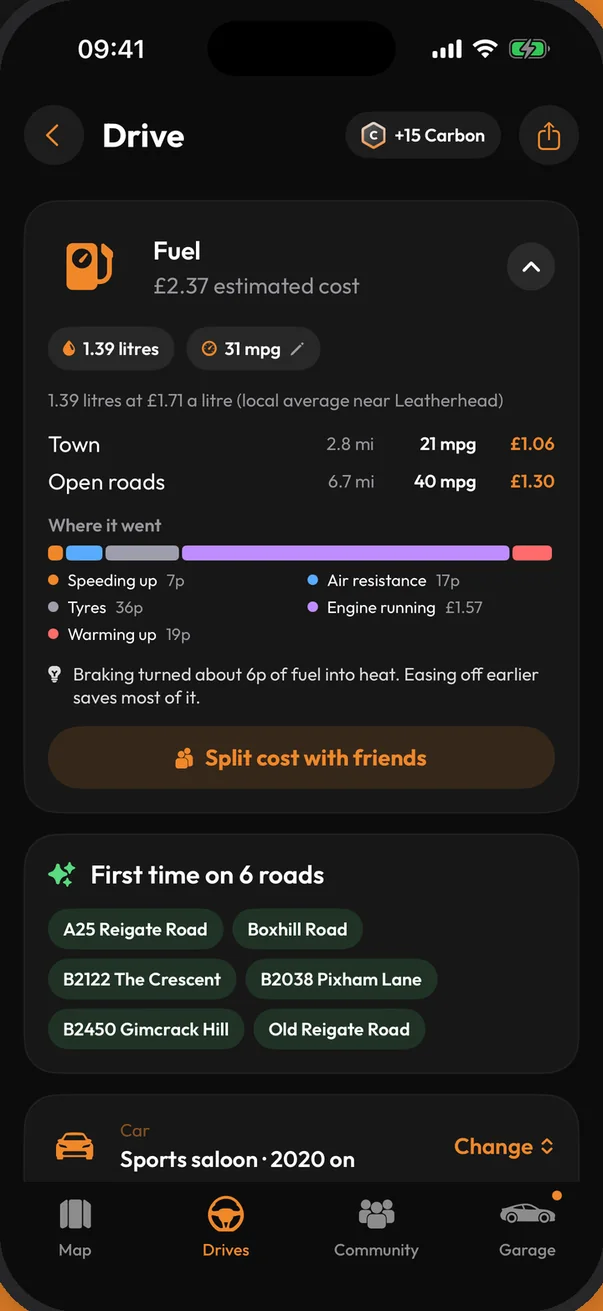
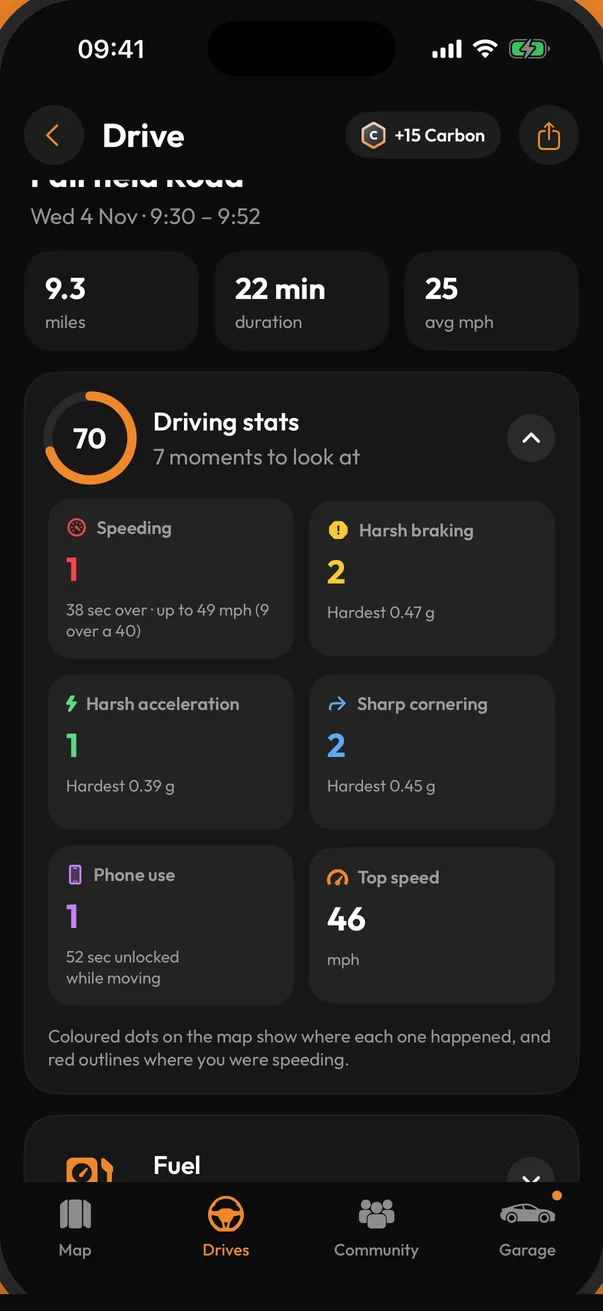
Motora records every drive on its own and scores how you drove, with harsh braking, hard acceleration, sharp corners and phone use pinned on the route.
With Motora Club it also works out what each drive cost for your exact engine, using pump prices near you, and shows your real economy against the official figure. Then build your car in a 3D garage.
Questions
What mpg does the Kawasaki Ninja 650 (2020 on) get?
The Kawasaki Ninja 650 (2020 on) officially does 62 to 64 mpg depending on the engine (4.4 to 4.6 L/100 km). The most economical is the Ninja 650 (A2 35 kW) at 64 mpg. Expect about 57 mpg in town and 49 mpg at a steady 70 mph from the Ninja 650 engine.
Which Kawasaki Ninja 650 (2020 on) is the most economical?
The Ninja 650 (A2 35 kW), officially 64 mpg. The least efficient is the Ninja 650 at 62 mpg.
Is the Kawasaki Ninja 650 (2020 on) better in town or on the motorway?
The Ninja 650 engine does better around town than you might expect, about 57 mpg, because small engines work hard at speed. At 70 mph it falls to about 49 mpg.
How much does 80 mph cost over 70 in the Kawasaki Ninja 650 (2020 on)?
For the Ninja 650 engine, about 22% more fuel over the same distance, on our model.
How much does the Kawasaki Ninja 650 (2020 on) cost to run in fuel?
About £1,023 a year for the Ninja 650 engine at 8,000 miles, in mixed driving, at average pump prices.
Is the Kawasaki Ninja 650 (2020 on) good on fuel?
For its power, the Ninja 650 engine is among the most efficient: 56 mpg in mixed driving on our estimates, against an average of 41 mpg across the 54 petrol, diesel and hybrid cars we cover with 54 to 84 hp.
Lists and comparisons
More fuel economy pages
Official figures are combined test results and can differ a little between markets. Town, road and motorway figures are Motora’s estimates from a physics model calibrated to each official figure, not measurements of a particular car. Motora isn’t affiliated with or endorsed by Kawasaki. How we work this out. Figures last updated 24 November 2026.